Tankless Vs. Standard Water Heaters: Making the Right Choice

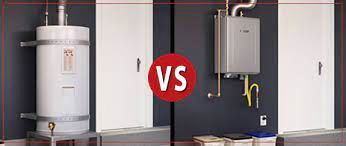
When it comes to choosing a water heater for your home, it's essential to understand the differences between tankless and standard water heaters. Both options have their advantages and considerations that can significantly impact your energy efficiency, comfort and overall satisfaction. In this post, we'll delve into the dissimilarities between tankless and standard water heaters to help you make an informed decision based on your needs and preferences.
How They Work
The primary distinction between tankless and standard water heaters lies in their operational mechanisms.
Standard water heaters, also known as tank water heaters, store and heat a large volume of water in a tank, typically ranging from 30 to 80 gallons. They use heat to maintain a constant temperature to ensure hot water is readily available whenever needed ( similar to a pot of water boiling on a stove). The heated water is stored until it is used, and then the tank refills and reheats the water. This refilling and reheating process is the reason you can "run out of hot water" with a tank model. You are waiting for the tank to reheat.
Tankless water heaters, as the name suggests, do not store water in a tank. Instead, they heat the water directly as it passes through the unit using powerful heating elements. Tankless systems provide hot water on-demand, eliminating the need for storage and ensuring a continuous supply of hot water as long as there is sufficient capacity. Tankless water heaters take up much less space than standard water heaters.
Energy Efficiency
Energy efficiency is a significant consideration when choosing a water heater, as it impacts both your monthly utility bills and environmental footprint.
Standard water heaters, continuously heat and reheat the water in their tank, even when hot water is not being used. This standby heat loss can result in higher energy consumption, especially if the tank is poorly insulated. However, newer models have improved insulation, reducing heat loss to some extent.
Tankless water heaters, are more energy-efficient because they heat water only when it is needed. As there is no standby heat loss, energy savings can be significant, particularly in households with low hot water usage. However, the energy efficiency of a tankless water heater can be influenced by the flow rate and the temperature rise required. In general, tankless water heaters will use less fuel to heat the same volume of water.
*according to Rheem, a leading manufacturer of both tankless and standard water heaters, tankless models will have approximately half of the annual operating costs of standard models.
Hot Water Capacity
The hot water capacity of a water heater is crucial, as it determines how much hot water your household can use simultaneously.
Standard water heaters are suitable for households with high hot water demand, offering a large storage capacity and the ability to supply multiple applications simultaneously. They have a lower upfront cost, but may lead to higher energy bills due to standby heat loss. Regular maintenance, the risk of large tank leaks, and eventual tank replacement should be factored into long-term costs.
Tankless water heaters, on the other hand, heat water as it is needed, eliminating standby heat loss. However, they may not be ideal for large homes or large families. Tankless water heaters heat water continuously, so a home will never "run out" of hot water, however improperly sized heaters can have inadequate flow rate during times of peak demand.
Cost
As a general rule of thumb, tankless water heaters are more expensive to purchase and install, especially if retrofitting an older home to accommodate a tankless model. However they are less expensive to operate and have a much longer life span. Standard models are less expensive to buy and install, however they must be replaced, on average, every 10 years. They are also more expensive to operate on a monthly basis.
Final Considerations
In conclusion, the choice between a tankless and a standard water heater untimately depends on your individual priorities and circumstances. Understanding their differences in operation, energy-efficiency, hot water capacity, and long-term costs will empower you to make an informed decision for reliable hot water.
If you are in Los Angeles and are in need of a new water heater, call our experts at Santa Monica Drain Co. Our licensed plumbers can help you to determine the proper water heater for your home, budget, and water demands. 310-422-8915


